Writing12 June 202310 min read
Adopt GPT, or Be History!
Introduction
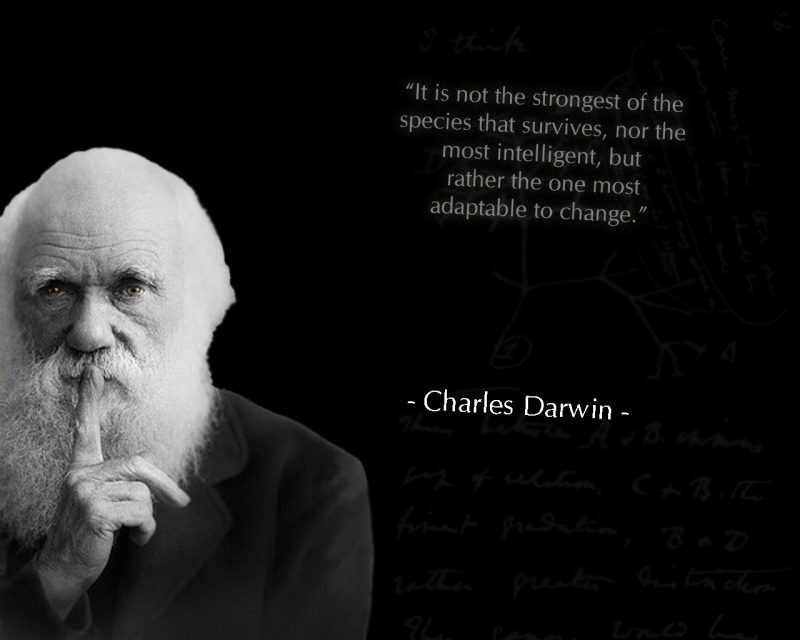
In the timeless words of Charles Darwin, "It is not the strongest of the species that survives, nor the most intelligent that survives. It is the one that is most adaptable to change." These words ring especially true in today's fast-paced, ever-evolving business landscape where adaptability often means adopting innovative technologies to stay ahead of the curve.
One such technology that has emerged as a game-changer is ChatGPT, an advanced AI model developed by OpenAI. Businesses and healthcare providers that have been quick to integrate this tool have experienced transformative changes. Take, for example, a mid-sized e-commerce platform that was struggling with an overwhelming volume of customer queries. The introduction of ChatGPT as a customer service assistant drastically improved response times, and consequently, customer satisfaction levels. Similarly, a healthcare provider used ChatGPT to analyze a backlog of patient records, aiding them in identifying patterns and providing personalized care more effectively.
For those that seize the opportunity, technologies like ChatGPT are not merely tools but catalysts for progress, creating a distinct competitive advantage. This post aims to explore the varied applications of ChatGPT across different sectors and illustrate how early adoption can set the stage for significant benefits.
Stay tuned as we delve into the world of ChatGPT, unpack its features, and discover its transformative potential across industries.
Background: Unpacking ChatGPT
Artificial Intelligence has evolved exponentially over the last few years, making its way from being a mere concept to a tangible technology that's shaping our daily lives. One of the most exciting advancements in this field is the emergence of large language models, such as ChatGPT.
ChatGPT is a conversational AI developed by OpenAI, which has garnered considerable attention for its ability to generate human-like text. Powered by machine learning algorithms and trained on diverse internet text, ChatGPT can understand prompts and generate detailed and relevant responses. This groundbreaking model not only understands context and responds intelligently, but also retains the ability to generate creative content, making it uniquely useful across a wide range of industries.
What sets ChatGPT apart is its versatility. Its wide-ranging applications span from customer support and automation to semantic search, document processing, data analysis, business intelligence, and even healthcare. In the following sections, we will delve into these applications, highlighting the transformative potential that ChatGPT offers to businesses and healthcare providers who are ready to ride the wave of this technological revolution.
Use Case 1: Customer Support
One of the most significant applications of ChatGPT lies in customer support. In an era where customers demand immediate and accurate responses, businesses often struggle to keep up. This is where ChatGPT can become an invaluable asset.
By integrating ChatGPT into their customer support systems, businesses can ensure that their customers receive timely, intelligent, and personalized responses. This AI-driven assistant can handle a high volume of queries simultaneously, eliminating long waiting times and significantly improving customer satisfaction.
Take, for example, the case of a leading e-commerce platform that integrated ChatGPT into their customer support system. The platform, which previously struggled with handling high volumes of customer queries, especially during sale events, found a reliable solution in ChatGPT. Post-integration, they reported an impressive 40% reduction in response time, along with improved customer feedback scores.
Such is the power of ChatGPT. It can drastically enhance a company's customer service capabilities, ensuring customers feel heard and supported at all times, thereby creating a stronger brand image and loyal customer base.
Use Case 2: Business Automation
In a world that's continuously moving at a fast pace, businesses are under constant pressure to enhance efficiency and productivity. Automation of routine tasks is a critical way of achieving this, and this is where ChatGPT shines.
ChatGPT can handle an array of tasks, ranging from scheduling appointments to sorting and sending emails, freeing up valuable human resources to focus on more complex and strategic tasks. The result is a smoother, more efficient operational workflow that drives productivity and reduces costs.
Consider the case of a global logistics company grappling with scheduling and communication challenges. After integrating ChatGPT into their operations, the company was able to automate the scheduling of deliveries and corresponding communications with clients. This not only freed up their staff's time for other important tasks but also reduced errors in scheduling and enhanced customer communication, leading to improved customer satisfaction and operational efficiency.
In a landscape where every second counts, automation powered by ChatGPT can give businesses a significant competitive edge. By taking over mundane tasks, it allows businesses to streamline their processes and focus on what truly matters - growth and innovation.
Use Case 3: Revolutionizing Search
In the digital age, where data is abundant, semantic search has become crucial for businesses to fetch the right information at the right time. ChatGPT, with its capability to understand and generate human-like text, can take semantic search to new heights.
Semantic search goes beyond keyword matching and considers the context, intent, and semantic meaning of search terms. With ChatGPT, businesses can significantly improve their search capabilities, enabling more accurate and relevant retrieval of information. This is particularly beneficial in fields like law, research, and any other areas where precise information retrieval is essential.
For instance, a legal firm that integrated ChatGPT into its system reported a substantial increase in the efficiency of their legal research. By using the advanced language understanding capabilities of ChatGPT, they were able to fetch highly relevant legal precedents and documents, saving countless hours and improving the quality of their legal advice.
Through this application, ChatGPT can help companies extract maximum value from their data, thereby enhancing their decision-making processes and ultimately leading to better business outcomes.
Use Case 4: Simplifying Document Processing
In a data-driven world, businesses often find themselves inundated with large volumes of documents. Processing these documents manually can be time-consuming and error-prone. This is where ChatGPT's capability can be game-changing.
ChatGPT can be utilized for tasks like data extraction, content categorization, and document summarization, which can significantly simplify the process of document management. By automating these tasks, businesses can save valuable time, reduce errors, and enhance overall efficiency.
Consider a multinational corporation that handles a large volume of contracts. Prior to ChatGPT integration, the company's legal team had to manually go through each contract to extract key details - a process that was not only time-consuming but also prone to human error. After employing ChatGPT, the company was able to automate the process of extracting key information from these contracts, thereby saving significant amounts of time and reducing the likelihood of errors.
By automating document processing tasks, ChatGPT offers businesses the opportunity to handle their data more efficiently, freeing up human resources to focus on tasks that require critical thinking and strategic decision-making.
Use Case 5: Data Analysis and Business Intelligence
In the era of big data, businesses are sitting on a goldmine of information. But, without the right tools, it's challenging to process this data and draw meaningful insights from it. This is where ChatGPT comes into the picture.
ChatGPT can sift through vast amounts of data, identifying trends and patterns that might otherwise go unnoticed. It can process unstructured data, summarize extensive reports, and generate insights that help drive decision-making. In essence, it acts as an intelligent layer, transforming raw data into valuable business intelligence.
Consider the example of a multinational retailer who harnessed the power of ChatGPT for data analysis. The company used ChatGPT to process customer purchase data, feedback, and online reviews. The insights derived from this analysis allowed the company to better understand customer behavior, tailor its product offerings, and personalize marketing campaigns, leading to increased sales and customer satisfaction.
In the world of business intelligence, where data is king, ChatGPT acts as a skilled advisor, translating complex datasets into actionable strategies. As businesses continue to generate and collect more data, the ability to effectively analyze this data using tools like ChatGPT will become increasingly critical for success.
Use Case 6: HR
In the field of recruitment, making informed decisions is crucial. Companies often have to sift through large volumes of candidate data - including CVs, cover letters, and interview notes - to find the right fit. This is where ChatGPT can make a significant difference.
ChatGPT can process and analyze these vast sets of data, enabling HR departments to identify patterns and draw meaningful insights. For instance, it can automate the initial screening of resumes, identifying key skills and experiences that align with the job description. This can drastically reduce the time recruiters spend on manual screening, allowing them to focus on engaging with potential candidates.
Let's consider the case of a tech company that integrated ChatGPT into its recruitment process. The AI tool helped analyze the data from thousands of applications, identifying the top candidates based on the required skills and experiences. This allowed the HR team to spend more time on interviewing these shortlisted candidates, leading to more informed hiring decisions.
ChatGPT's role in enhancing data analysis capabilities in recruitment processes can provide businesses with a competitive edge, enabling them to identify, engage, and recruit top talent effectively and efficiently.
Use Case 9: Healthcare
The healthcare sector is known for being data-rich, with vast amounts of patient information stored in clinical notes and personal health records. However, it's a challenge to process and analyze these data effectively and efficiently to extract valuable insights. This is another area where ChatGPT can bring transformative changes.
ChatGPT's advanced language model can sift through large volumes of patient data, interpret complex medical terminology, and provide valuable summaries and insights. It can analyze clinical notes, identify patterns, and even help flag potential health risks based on a patient's history. This can immensely assist healthcare providers in making more informed and timely decisions.
For instance, a leading hospital utilized ChatGPT to analyze their backlog of patient records. This AI-powered tool helped the hospital identify patterns and trends in patient health, allowing for more personalized care and improved health outcomes.
In this way, ChatGPT can become an invaluable tool for healthcare providers, enabling them to harness the power of their data to provide better, more personalized care for their patients. The implications of this are immense - from improved patient outcomes to the advancement of medical research.
Use Case 10: Case Management in Law
In the legal sector, managing cases, reviewing documents, and conducting legal research can often be time-consuming and complex. Here, ChatGPT can offer significant advantages.
ChatGPT can streamline case management by automatically sorting and organizing case-related documents, tracking deadlines, and reminding legal professionals of upcoming tasks or appointments. Moreover, it can assist in reviewing legal documents, identifying key points, and summarizing content, thereby reducing the workload of legal professionals.
For instance, imagine a law firm overwhelmed with numerous case files, legal documents, and imminent deadlines. Upon integrating ChatGPT into their workflow, the firm could automate many of these tasks, enabling the lawyers to focus more on case strategy and client interaction.
Furthermore, ChatGPT could also aid in legal research, efficiently sifting through vast legal databases to retrieve relevant case laws, legal articles, and judgments based on specific queries. This function could dramatically decrease the time spent on legal research, and thereby increase overall productivity.
In essence, by automating routine tasks and assisting with document review and legal research, ChatGPT can become an invaluable tool for legal professionals, driving efficiency, accuracy, and productivity in their work.
Implementation Challenges
While ChatGPT offers impressive potential, implementing it brings challenges. These include data privacy concerns, particularly in sectors handling sensitive data, technical complexities involved in integrating ChatGPT into existing systems, and the need to manage expectations about what the AI can and cannot do. By acknowledging and addressing these issues, businesses can harness the full benefits of ChatGPT.
Conclusion
As we look ahead, it's clear that ChatGPT has tremendous potential to transform business operations across a wide range of industries. From enhancing customer support to revolutionizing healthcare, the use cases are vast and varied. However, successful implementation requires careful navigation of challenges, including data privacy, system integration, and expectation management.
Companies that adopt ChatGPT early and leverage its capabilities effectively are likely to gain a significant competitive advantage. As Charles Darwin once said, "It is not the strongest of the species that survives, nor the most intelligent; it is the one most adaptable to change." In the world of business, adaptability often means leveraging technology, and in this case, the transformative potential of ChatGPT.
In a world that is rapidly evolving, the ability to harness the power of AI technology like ChatGPT could well be the deciding factor between business success and stagnation. The time to embrace this change is now.